


Google is introducing a new way for users to regain access to their accounts—using a short selfie video instead of relying solely on passwords or traditional recovery methods. The feature, known as Google selfie video verification, is designed to improve identity verification during account recovery while making it harder for cybercriminals to hijack accounts.
The move reflects Google’s broader shift toward passwordless security, where biometrics, passkeys, and artificial intelligence play a larger role in protecting user accounts.
What Is Google Selfie Video Verification?
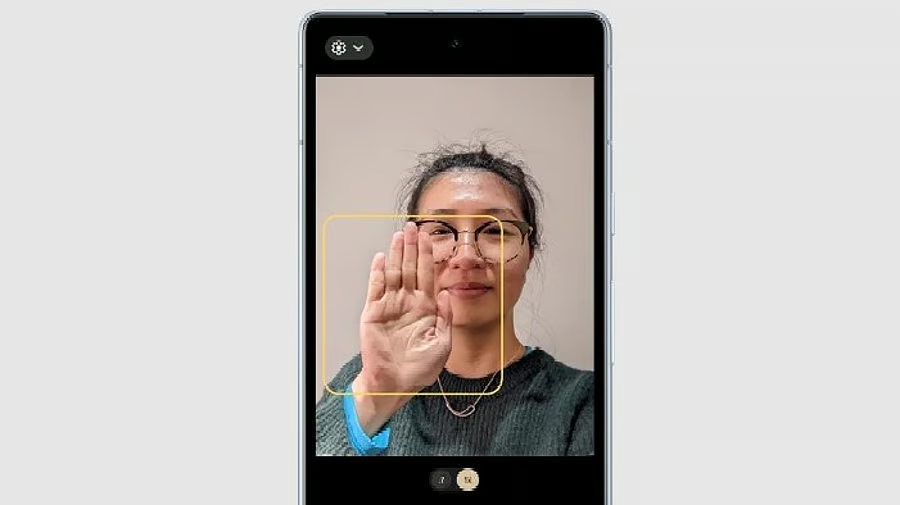
Google selfie video verification is a recovery method that asks users to record a brief selfie video when attempting to recover a locked or inaccessible Google Account.
Rather than simply entering a password or answering security questions, eligible users can verify their identity by submitting a short facial video. Google’s systems analyze the recording to confirm that it belongs to a real person and matches the account owner’s identity.
Unlike a static photograph, a moving selfie video allows Google to perform advanced “liveness detection,” helping distinguish genuine users from spoofing attempts involving printed photos or manipulated images.
Why Google Is Introducing Selfie Video Verification
Passwords remain one of the weakest points in online security.
Millions of credentials are exposed every year through phishing attacks, malware, and data breaches. Even users who enable two-factor authentication sometimes lose access when they change phones or forget recovery information.
Google says selfie video verification provides another secure recovery option while reducing fraudulent account recovery attempts.
The technology aims to:
- Prevent identity theft
- Reduce account hijacking
- Improve account recovery success rates
- Detect AI-generated fake identities
- Confirm that the person requesting access is physically present
How Google Selfie Video Verification Works
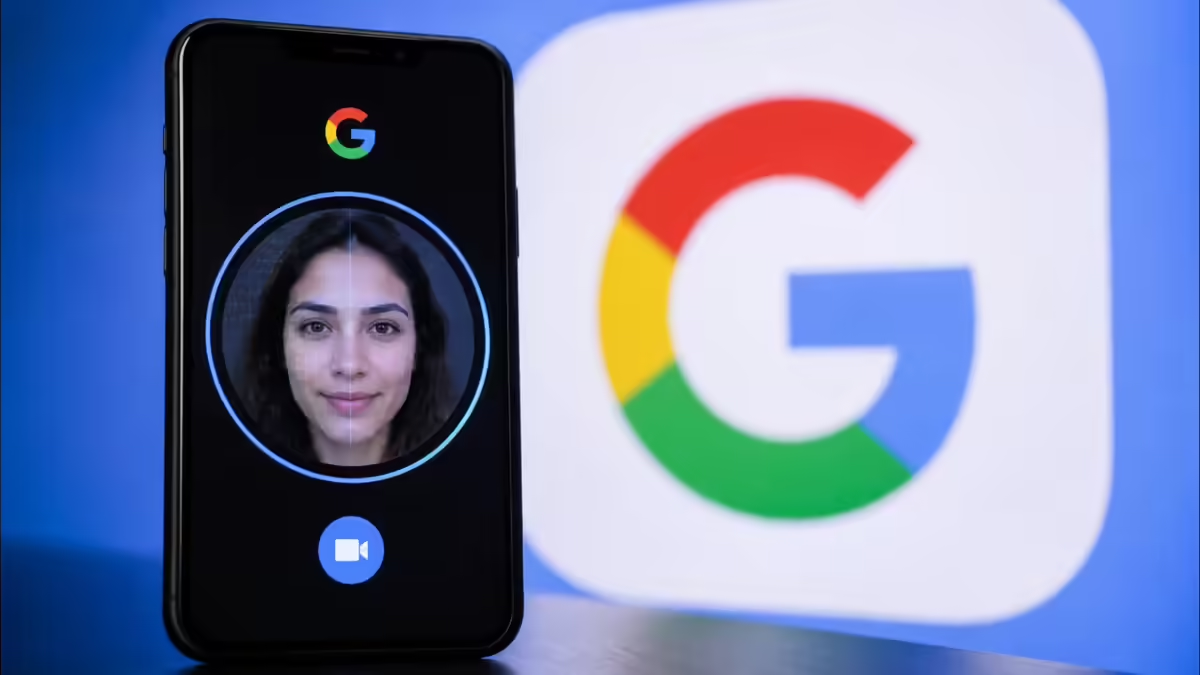
Although the feature is not required for everyday sign-ins, eligible users may see it during account recovery.
The process generally involves:
- Starting Google Account recovery.
- Choosing selfie video verification if offered.
- Recording a short facial video following on-screen instructions.
- Google’s AI performs liveness detection.
- The system evaluates facial characteristics.
- If verification succeeds, account recovery continues.
The process usually takes only a few moments.
Is Google Replacing Passwords?
No.
Google is not eliminating passwords entirely.
Instead, selfie video verification becomes an additional recovery tool alongside:
- Passkeys
- Security keys
- Two-factor authentication
- Recovery phone numbers
- Recovery email addresses
Users can still sign in using their preferred authentication method.
Why Selfie Videos Are More Secure Than Photos
Cybercriminals increasingly use stolen profile pictures and AI-generated images to impersonate victims.
A selfie video provides more information than a still image, allowing Google’s systems to verify:
- Natural facial movement
- Eye blinking
- Head movement
- Lighting consistency
- Human presence
These checks make it significantly harder to fool automated identity verification systems.
Privacy Considerations
Whenever biometric information is involved, privacy becomes a major concern.
Google says selfie videos used during verification are intended solely for identity confirmation and fraud prevention. Users should always review Google’s privacy documentation to understand how verification data is processed, stored, and protected.
The company has not indicated that selfie video verification will replace existing privacy controls.
Benefits for Users
The new verification option offers several advantages.
Faster Account Recovery
Users locked out after forgetting passwords may regain access more quickly.
Better Protection Against Scammers
Video verification makes social engineering attacks more difficult.
Reduced Dependence on Passwords
As passwordless authentication expands, users can rely less on memorizing complex passwords.
Improved Fraud Detection
Artificial intelligence can identify suspicious recovery attempts that traditional systems may miss.
Potential Challenges
Despite its benefits, selfie video verification may not work perfectly in every situation.
Potential limitations include:
- Poor camera quality
- Low-light environments
- Internet connectivity issues
- Accessibility concerns
- Users uncomfortable with biometric verification
Google is expected to continue offering alternative recovery methods where appropriate.
What This Means for Cybersecurity
The rollout highlights a broader industry trend toward stronger identity verification.
Major technology companies are increasingly moving beyond passwords by combining:
- Biometrics
- Artificial intelligence
- Device trust
- Passkeys
- Risk-based authentication
Security experts generally agree that layered authentication offers better protection than passwords alone.
For users, this means account security will increasingly depend on proving identity rather than simply remembering credentials.
Should You Use Google Selfie Video Verification?
If offered during account recovery, selfie video verification can provide an additional layer of protection, especially for users who have lost access to recovery devices or forgotten passwords.
However, users should still:
- Enable two-factor authentication.
- Use passkeys where supported.
- Keep recovery information updated.
- Avoid phishing websites.
- Regularly review account security settings.
No single authentication method eliminates risk, but combining multiple verification methods significantly improves account security.
The Bigger Picture
Google’s adoption of selfie video verification demonstrates how digital identity is evolving. Instead of relying solely on passwords—long regarded as one of cybersecurity’s weakest links—the future increasingly combines artificial intelligence, biometrics, and behavioral signals to verify legitimate users while blocking fraudsters.
As online threats become more sophisticated, innovations like selfie video verification could become a standard feature across banking, social media, cloud services, and enterprise platforms.
Frequently Asked Questions
Can Google users unlock accounts with a selfie video?
Yes. Google has introduced selfie video verification as an account recovery option for eligible users to help verify identity when regaining account access.
Does Google selfie video verification replace passwords?
No. Passwords, passkeys, recovery emails, recovery phone numbers, and two-factor authentication remain available.
Is Google selfie verification secure?
Google uses liveness detection and AI-powered identity verification to help prevent fraud and reduce account hijacking.
Will everyone get the feature?
Google typically rolls out new security features gradually, so availability may vary by region, account type, and recovery scenario.
Is Google storing my selfie video?
Google states that verification data is used for identity verification and fraud prevention. Users should review Google’s privacy documentation for details on data handling.
Key Takeaways
- Google selfie video verification adds a new account recovery option.
- The feature helps verify identity through a short facial video.
- It complements—not replaces—passwords and passkeys.
- AI-powered liveness detection improves protection against account hijacking.
- Users should continue using layered security measures for maximum protection.

AI Engineer (Applied Generative AI), Web Developer, Growth Systems Builder and tech writer with a great passion for building AI-powered workflows, websites, and digital growth systems.




1 comment