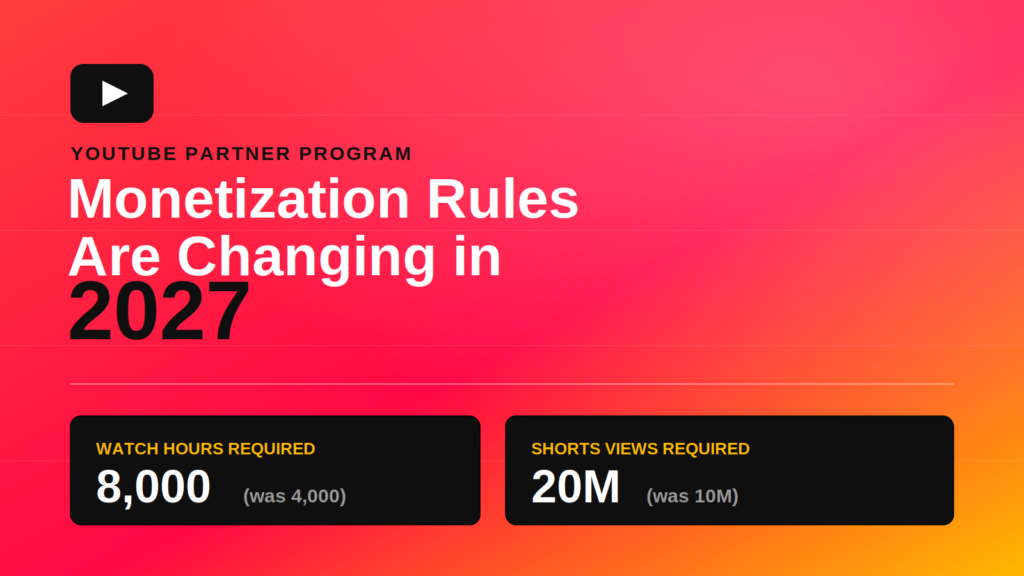
YouTube just announced the biggest shake-up to its Partner Program (YPP) eligibility rules since 2018. Starting February 1 next year, YouTube Monetization Requirements 2027 doubles in the number of watch-hour and Shorts-view thresholds to qualify for the Premium revenue sharing application.
If you’re a creator — established or aspiring — here’s what’s changing, who it affects, and how to prepare.
The New Requirements at a Glance
Currently, to join the top tier of YPP (ad revenue and YouTube Premium revenue sharing), a channel needs:
- 1,000 subscribers, plus either
- 4,000 valid public watch hours over the past 12 months, or
- 10 million qualified Shorts views over the past 90 days
From February 1, 2027, new applicants will need:
- 1,000 subscribers (unchanged), plus either
- 8,000 qualified public watch hours over the past 365 days, or
- 20 million qualified public Shorts views within 90 days
In other words, the subscriber bar stays exactly where it is — but the performance bar doubles across the board.
YouTube Monetization Requirements 2027: The Most Important Details
1. This only applies to new applicants — for now. Creators already enrolled in YPP are grandfathered in. You won’t be kicked out for failing to meet the new 8,000-hour or 20-million-view thresholds retroactively. However, existing partners will need to review and accept updated YPP terms in YouTube Studio by January 31, 2027 — miss that, and your monetization could be affected.
2. Shorts monetization now has an ongoing, rolling requirement. This is arguably the biggest change for short-form creators. Even channels already in YPP will need to maintain 10 million qualified Shorts views over a trailing 90-day window to keep earning from Shorts ads specifically. Fall below that, and Shorts revenue pauses — but you don’t lose YPP membership altogether, and long-form ad revenue keeps flowing. Cross the threshold again, and Shorts payouts resume automatically.
3. The lower, 500-subscriber entry tier is untouched. YouTube’s “starter” tier — which unlocks fan funding tools (Super Thanks, Super Chat, memberships) and some shopping features at 500 subscribers, 3 uploads in 90 days, and 3,000 watch hours or 3 million Shorts views — is not changing. This remains the easiest on-ramp to any kind of monetization on the platform.
4. YouTube is leaning into alternative revenue streams. Alongside the stricter thresholds, YouTube is expanding Premium Lite — a cheaper, ad-reduced subscription tier — to every market where standard Premium is available. The company also says it plans new milestone incentives for smaller channels (under 10 million views), shifting emphasis toward YouTube Shopping bonuses, brand deal support, and trend-based boosts rather than pure AdSense payouts.
5. Direct 45% revenue share for small ad placements. When an advertiser targets a very small group of five or fewer channels, eligible creators can now receive a direct 45% revenue share on those placements, on top of standard Creator Pool earnings — a notable sweetener buried in the announcement.
Why Is YouTube Doing This?
YouTube’s official line is that the changes reward “active, consistent” creators and reflect how much the platform has grown — the company cites over 200 billion daily Shorts views and more than a billion daily watch hours on TV screens globally. Reading between the lines, it’s also a filtering mechanism: raising the bar reduces the number of borderline, low-effort, or inactive channels drawing from the ad revenue pool, while directing more total dollars toward creators who consistently produce and hold an audience. YouTube has said it expects to pay creators more in aggregate in 2027 than in 2026, despite the stricter entry point.
What Creators Should Do Now
If you’re close to today’s 4,000-hour or 10-million-Shorts-view threshold: Push to hit the current requirements before February 1, 2027. Applying under the old rules, even by a narrow margin, locks in the lower bar — you won’t need to hit 8,000 hours or 20 million views to get in.
If you’re already in YPP: You’re safe from the new entry requirements, but don’t get complacent. Mark January 31, 2027 on your calendar to accept the updated terms in YouTube Studio, and if Shorts make up a meaningful share of your income, start tracking your trailing 90-day Shorts view count now so you’re not caught off guard by the new 10-million rolling requirement.
If you’re just starting out: Target the 500-subscriber tier first. It’s unchanged, gets you into fan funding and shopping tools quickly, and buys you time to build toward the higher ad-revenue thresholds without pressure.
If you’re far from either performance route: Consider diversifying now rather than waiting on ad revenue. Brand deals, channel memberships, Super Thanks, and shopping integrations don’t require YPP’s top tier, and YouTube’s own roadmap suggests it wants to push smaller creators toward these tools anyway.
For Shorts-heavy channels specifically: Treat 20 million qualified views in 90 days as your new north star for entry — and once in, budget for the reality that Shorts income can now switch on and off based on a rolling window, rather than being a one-time bar you clear and forget.
The Bottom Line
This is YouTube’s first major overhaul of Partner Program eligibility since 2018, and it signals a platform prioritizing depth of engagement over sheer number of monetized accounts. Existing creators get breathing room via grandfathering, but the message to newcomers is clear: building an audience — not just clearing a bar — is now the price of entry. Creators with time before February 2027 should treat the next several months as a runway to qualify under the current, easier thresholds wherever possible.

The WIRED.Africa's Press Desk delivers breaking news, official announcements, and timely updates on technology, business, innovation, and digital policy. Stories published under this byline are produced through the collaborative efforts of the editorial team and trusted news sources.