





Google’s New Smart Glasses Signal the Next Computing Shift — What It Means for Africa
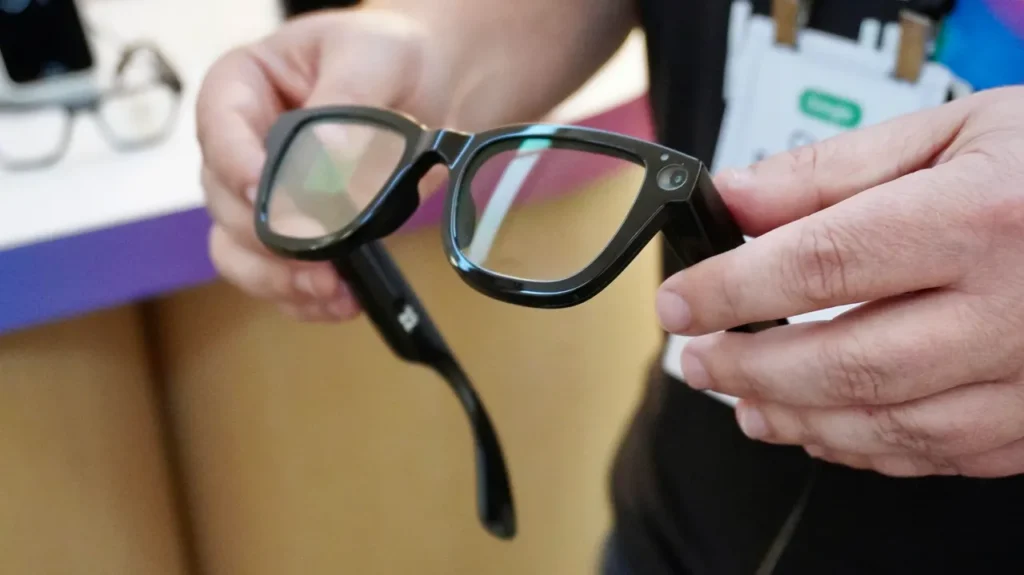
Google’s latest foray into wearable technology marks a decisive step toward ambient, AI-driven computing. The newly unveiled smart glasses—built within the company’s evolving Android XR ecosystem and powered by its Gemini AI—are designed to move digital interaction beyond smartphones and into the user’s immediate environment.
Unlike earlier, more experimental attempts at smart eyewear, this generation reflects a more mature convergence of artificial intelligence, voice interfaces, and lightweight hardware. The device comes in two configurations: an audio-first version focused on voice interaction, and a more advanced model capable of delivering visual overlays such as navigation cues, live captions, and contextual prompts.
A shift toward “screenless” computing
At its core, the product represents a broader industry transition—from handheld devices to what can be described as ambient computing. Users no longer need to actively “open” apps; instead, information is delivered contextually, in real time, through voice and subtle visual assistance.
For global markets, this is an evolution. For Africa, it could be transformational.
Implications for Africa’s digital ecosystem
The African tech landscape—characterized by rapid mobile adoption, a large informal economy, and diverse linguistic environments—presents a unique set of use cases for this kind of technology.
Language and accessibility:
Real-time translation capabilities could significantly reduce communication barriers across multilingual societies like Nigeria, where hundreds of local languages coexist with English as a formal medium.
Productivity in informal sectors:
For traders, delivery riders, and small-scale entrepreneurs, voice-enabled assistance could streamline navigation, transactions, and customer interactions without requiring constant phone use.
Education and knowledge access:
Students and professionals could leverage AI-driven explanations, summaries, and real-time assistance in a hands-free format—particularly valuable in regions where access to structured learning tools is uneven.
Media and content creation:
With integrated cameras and AI support, the glasses could enable a new wave of mobile journalism and content creation, allowing users to capture, edit, and distribute content seamlessly from their point of view.
The reality check: access and affordability
Despite its potential, adoption in Africa will be shaped by familiar constraints—pricing, infrastructure, and distribution.
Like most emerging technologies, Google’s smart glasses are expected to launch at a premium price point. This will likely limit early adoption in Nigeria and similar markets to a narrow segment: tech enthusiasts, media professionals, and corporate users.
Connectivity is another factor. While the device leverages cloud-based AI capabilities, consistent high-speed internet—still uneven across many African regions—will be critical to unlocking its full potential.
When will Nigeria get it?
Google is expected to prioritize the United States and select European markets for its initial rollout, likely toward the end of 2026. Broader international expansion should follow in 2027.
For Nigeria, a realistic entry window falls between late 2027 and 2028, depending on:
- Local distribution partnerships
- Pricing adjustments or lower-cost variants
- Telecom readiness, particularly around 5G and cloud infrastructure
As with smartphones a decade ago, Africa is unlikely to be part of the first wave—but it is firmly positioned in the next phase of global expansion.
The bigger picture
What makes this launch significant is not just the device itself, but what it represents: a future where computing becomes less visible, more intuitive, and deeply integrated into everyday life.
For Africa, the question is not whether this technology will arrive—but how quickly it can be adapted to local realities. If cost barriers are addressed and infrastructure continues to improve, smart glasses could follow a trajectory similar to smartphones—moving from niche to necessity within a decade.
In that sense, Google’s latest innovation is more than a product launch. It is an early signal of the next digital frontier—one in which Africa, once again, stands to leapfrog traditional pathways and define its own version of adoption.

AI Engineer (Applied Generative AI), Web Developer, Growth Systems Builder and tech writer with a great passion for building AI-powered workflows, websites, and digital growth systems.




3 comments