





What Meta confirms, what the Facebook Papers revealed, and what creators and publishers should — and should not — conclude from the evidence.
For years, one of the most persistent beliefs among Facebook creators, publishers and social-media managers has been simple: any engagement is good engagement.
If a post attracts 500 comments, 1,000 reactions and a heated argument in the comments, the thinking goes, Facebook algorithm will see the activity and reward the post with even more distribution.
That assumption is incomplete.
Facebook does value interaction, but it does not treat every interaction as equally valuable, and it does not operate on a simple formula in which 1,000 comments automatically beat 100 comments. Meta describes Feed ranking as a prediction system that combines numerous signals to estimate what content is relevant and meaningful to an individual user. Those signals include likes, comments, shares, viewing behaviour and a person’s previous interactions with similar content.
More importantly, Facebook also gives users explicit ways to tell the platform that they do not want to see something. Choosing “Show less”, hiding a post, unfollowing a Page or temporarily hiding content can influence what that individual user sees in the future. Meta says “Show less” temporarily decreases the ranking score of a post and similar posts.
That distinction matters.
A post can generate a lot of activity and still perform poorly if the activity is accompanied by signals indicating that users find the content irrelevant, low quality, misleading or unpleasant.
But there is an equally important caveat: there is no publicly documented 2026 Facebook formula that says “10 angry reactions = X points deducted from reach.” Anyone presenting such a formula as fact is going beyond what Meta publicly discloses.
The evidence is therefore best understood in three layers:
- What Meta currently confirms about ranking and negative feedback.
- What the Facebook Papers revealed about historical ranking decisions, particularly the Angry reaction.
- What publishers and social-media analysts can reasonably infer from those mechanisms today.
1. Facebook does not simply count engagement
The first misconception to remove is the idea that Facebook’s algorithm is essentially a popularity counter.
It isn’t.
Meta has described Feed ranking as a process involving four broad stages: the available inventory of posts, signals about those posts and users, predictions about how people will interact with them, and a relevance score that determines their position in the Feed.
Meta’s more recent AI documentation describes thousands of signals being used across Facebook and Instagram. For example, its systems can consider the number of likes, comments and views a post has received, how long someone watches a video, and how a person has previously interacted with a particular creator.
That means this:
1,000 comments does not automatically mean better distribution than 200 comments.
Facebook is attempting to predict what kind of interaction is taking place and whether a particular user is likely to find the content worthwhile.
This is especially important for publishers.
Imagine a Nigerian news Page publishes:
“JUST IN: Government Announces New Electricity Tariff”
The post receives:
- 2,000 reactions
- 800 comments
- 300 shares
At first glance, it looks like a highly successful post.
But suppose a large proportion of the comments are:
“Fake news.”
“This Page always lies.”
“Stop posting rubbish.”
“Unfollowed.”
And thousands of users subsequently hide the post, select a negative feedback option or stop engaging with similar content from the Page.
The raw engagement number tells only part of the story.
Facebook’s ranking systems are designed to make predictions about individual users, not simply reward the Page with the largest comment count.
2. “Show less” is a real ranking signal

This is one of the clearest areas where the evidence is stronger than the usual social-media folklore.
Meta introduced Show More and Show Less controls to give users more direct influence over their Feed.
Meta says selecting “Show more” temporarily increases the ranking score for the post and posts like it, while selecting “Show less” temporarily decreases the ranking score.
Meta’s AI documentation similarly says users can use controls such as unfollowing an author, temporarily hiding content or selecting “Show less” to temporarily decrease the ranking score for similar types of content.
That is an important distinction.
A user selecting Show less is not simply “engaging negatively.”
They are giving Facebook an explicit recommendation:
“I don’t want more of this.”
The system can then use that information when deciding what that particular person should see.
A real-world example
Consider a business Page selling smartphones in Lagos.
The Page posts 15 times a week, and one post reads:
“Buy this phone today for ₦450,000 — cheapest price in Nigeria!”
The post gets decent comments, but a significant number of people discover that the price excludes accessories and delivery. Some complain publicly. Others hide the post or indicate that they want to see less similar content.
The Page may still receive comments from people arguing about the price.
But the comments alone do not tell Facebook that everyone wants more smartphone-sales posts.
For the individual users who have signalled that they want less of that content, Facebook has received the opposite instruction.
This is why negative feedback is more important than the raw engagement number suggests.
3. A hide is not simply a “negative like”
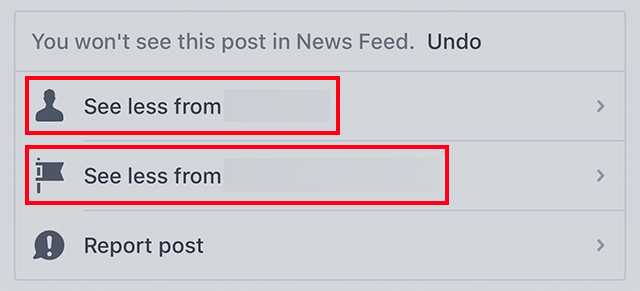
It is also important not to overstate what a hide does.
A person hiding a post does not necessarily mean Facebook imposes a universal penalty on the Page’s next post for every user.
The documented mechanism is primarily about personalising the user’s Feed.
Meta says its recommendation systems use information about a person’s interaction history and provide controls that allow that person to see less of particular content.
So there are two different scenarios.
Scenario A: one person hides your post
Facebook learns something about that person’s preference.
That user may subsequently see fewer similar posts.
Scenario B: many users repeatedly provide negative feedback
Now the Page has a much more significant distribution problem.
Even without assuming a secret “Page penalty,” the practical consequence can be substantial: fewer people are receptive to the Page’s content, fewer people may interact positively with subsequent posts, and fewer people may receive those posts in recommendation surfaces.
That is a much more defensible explanation than saying:
“Facebook sees one hide and cuts your Page’s reach by 10%.”
There is no public evidence for such a fixed formula.
4. The Angry reaction has a fascinating — and very different — history
This is where the Facebook Papers become important.
The historical record is considerably more dramatic than the current public documentation.
According to internal documents reviewed and reported on by the Washington Post in 2021, Facebook’s ranking system beginning in 2017 treated the five additional emoji reactions — Love, Haha, Wow, Sad and Angry — as significantly more valuable than a conventional Like when calculating Feed ranking. The reported weighting was five times the value of a Like.
The key detail that is sometimes lost in coverage is that the initial 5x weighting applied to the reaction category generally, rather than Facebook deliberately deciding from day one that the Angry button alone should boost rage.
The problem emerged because researchers discovered that the different reactions did not have equivalent consequences in the real world.
Angry reactions were disproportionately associated with problematic material.
Internal research cited in the Facebook Papers found that Angry reactions were much more common on certain categories of low-quality civic news, misinformation, toxicity and health misinformation.
In other words, the system had a problem:
It was treating a powerful emotional response as evidence that a post was valuable, when the emotion was sometimes evidence that the content was inflammatory or harmful.
5. The 5x figure is historical — don’t use it as today’s Facebook formula
This is where many articles about the Facebook algorithm go wrong.
They report:
“Angry reactions are worth five times a Like.”
That statement is misleading if presented as a current rule.
The 5x weighting was part of a historical ranking system documented in the Facebook Papers.
Facebook subsequently changed the weighting.
The Washington Post reported that the company eventually reduced the Angry reaction’s ranking value to zero. Internal company research found that after the change, users encountered less misinformation, disturbing content and graphic violence.
Academic literature has also documented the reduction of the Angry reaction’s ranking weight from its earlier level to zero.
So the responsible conclusion is not:
“Angry reactions currently hurt your Page by five points each.”
It is:
Facebook’s historical ranking system demonstrates why treating every reaction as an equally positive engagement signal can produce unintended consequences.
That distinction is crucial.
6. The Facebook Papers exposed a bigger problem than emojis

The Angry button was only part of the story.
Facebook’s earlier emphasis on what it called Meaningful Social Interactions placed greater importance on conversations, comments and interactions between people.
In 2018, Facebook publicly announced that it would prioritise posts that generated conversations and interactions between people. It specifically said posts that sparked back-and-forth discussion could appear higher in Feed.
The company also acknowledged that this change could reduce distribution for Pages, publishers and businesses.
That created an unintended incentive.
If a Page discovered that:
“Normal post = 50 comments”
while:
“Controversial post = 2,000 comments”
the temptation was obvious.
Publish controversial material.
The Facebook Papers later documented concerns inside the company that the ranking system was disproportionately amplifying divisive and problematic content because such material generated powerful reactions and conversations.
This is the historical basis for today’s widespread belief that “Facebook rewards outrage.”
The reality is more nuanced.
Facebook was not simply programmed with:
ANGER = BOOST
Rather, some of its ranking signals rewarded behaviours that happened to correlate strongly with anger, controversy and polarisation.
That distinction matters when analysing how the system works.
7. Comments can help — but “comments” are not one uniform signal
Meta has explicitly said that comments and replies are signals used in ranking.
But comments themselves are also ranked.
In 2019, Facebook explained that its public-comment ranking system considered signals such as whether people liked, reacted to or replied to comments, as well as integrity signals and whether a comment was considered low quality or engagement bait.
That means a comment section is effectively another ranking environment.
Consider two posts.
Post A
“What do you think about the new smartphone from Tecno?”
Comments:
- “I like the camera.”
- “Battery looks impressive.”
- “Has anyone tested it?”
- “Where can I buy it?”
- “I prefer the previous model.”
Post B
“THIS IS THE WORST PHONE EVER MADE!!!”
Comments:
- “You’re lying!”
- “You don’t know anything.”
- “This Page is useless.”
- “Stop misleading people.”
- “😂😂😂”
- “Delete this nonsense.”
Both posts are generating comments.
But they represent very different conversations.
Facebook’s public documentation does not say that “positive comments receive X points and negative comments receive Y points.” It does, however, make clear that ranking systems consider the quality and nature of interactions rather than treating every interaction as interchangeable.
8. This is where “rage bait” becomes dangerous for publishers
A publisher can deliberately manufacture controversy to get comments.
For example:
“Only fools still use Android in 2026.”
That headline could produce hundreds of comments.
Android users will respond.
iPhone users will respond.
People will insult the writer.
Others will share it into WhatsApp groups with captions such as:
“See what this blog is saying.”
On the surface, the post appears to have succeeded.
But this strategy can create several problems.
First, the audience may begin associating the Page with low-quality or inflammatory content.
Second, users may hide, unfollow or report content they find objectionable.
Third, the Page may attract an audience interested primarily in arguing rather than consuming its core content.
Fourth, the publisher can become dependent on increasingly provocative headlines to maintain engagement.
That creates what might be called an outrage treadmill:
controversy → engagement → more controversy → audience fatigue → more extreme content.
The Facebook Papers showed why platform designers became concerned about precisely these types of incentives.
9. Negative feedback is different from disagreement
This is another distinction publishers should understand.
A person disagreeing with your post is not necessarily giving Facebook a negative feedback signal.
Someone can comment:
“I strongly disagree with this analysis.”
That is still a comment.
Another person might react with Angry.
Someone else may share the post specifically to challenge it.
These actions can still generate distribution.
By contrast, when a user actively tells Facebook:
“Show me less of this.”
or hides the post, unfollows the source or otherwise uses a Feed control, the platform has received a much clearer preference signal.
Meta’s own documentation describes these controls as mechanisms for adjusting what users see.
Therefore:
Criticism is not automatically a ranking penalty.
This is important for news organisations.
A hard-hitting investigative story can attract thousands of angry comments without necessarily being “suppressed because people are angry.”
If readers are still clicking, watching, sharing and discussing the material, it can remain highly relevant.
The problem occurs when negative reactions are accompanied by broader signals that tell the system:
“People don’t actually want this content.”
10. A political Page is an especially useful example
Consider a political candidate’s Facebook Page during an election campaign.
The Page publishes:
“Our candidate will reduce unemployment by 500,000 jobs.”
The post receives:
- 8,000 reactions
- 3,000 comments
- 1,500 shares
The campaign team celebrates.
But the comments are overwhelmingly hostile:
“How?”
“Another empty promise.”
“They said this in 2019.”
“Lies.”
“I have unfollowed this Page.”
Some users hide the post. Others stop following the Page.
Should the campaign conclude that the post was a success because it generated 12,500 interactions?
Not necessarily.
The campaign should instead examine:
- shares;
- meaningful comments;
- video watch time;
- link clicks;
- positive versus negative sentiment;
- follower growth;
- unfollows;
- hides and other available feedback;
- conversion to campaign actions;
- performance of subsequent posts.
The quality of engagement matters.
11. The same problem affects media organisations
Imagine a Nigerian technology publication publishes a story titled:
“MTN Launches New AI-Powered Service for Nigerian Customers.”
A factual headline might generate modest engagement.
Then the publisher changes the headline to:
“MTN Just Did Something Nigerians Will HATE.”
The second version may generate substantially more comments.
But if the article does not deliver on the sensational headline, the audience can react negatively.
Some users may click and leave immediately.
Others may comment angrily.
Others may hide the post.
And the Page has now learned something unpleasant: it may be getting engagement by disappointing its audience.
For a serious regional technology publication, that is a poor long-term strategy.
The objective should not be to maximise the number of people who can be provoked into commenting.
It should be to maximise the number of people who consider the content useful enough to continue consuming.
12. Don’t confuse reach suppression with content enforcement
There is another important distinction between ranking and policy enforcement.
Facebook can reduce the distribution of certain content because it is considered low-quality, misleading, problematic or otherwise unsuitable for broad recommendation.
That is different from removing the content entirely.
Meta has historically explained that ranking can change the signals and predictions used to calculate relevance, causing content to appear lower in Feed rather than disappearing altogether.
This produces three different outcomes:
1. Removal
The content violates a rule and is taken down.
2. Recommendation or ranking reduction
The content remains available but is less likely to be surfaced prominently.
3. Ordinary personalisation
A particular user simply sees less of the content because their own activity indicates that they are not interested.
These should never be casually described as the same thing.
13. What about hiding negative comments?
This is where social-media management becomes more complicated.
A Page administrator may be tempted to delete every critical comment.
That is not necessarily good strategy.
Facebook allows Page owners to moderate comments, and its comment-ranking system can consider whether the Page itself has interacted with a comment. Meta has said that comments receiving interactions from the original Page or person can be shown more prominently, subject to other quality and integrity signals.
For a legitimate complaint, a better strategy can therefore be:
Acknowledge → clarify → solve → move on.
For example:
“We’re sorry about the delay. Please send us your order number by DM and we’ll check what happened.”
That turns a potentially damaging complaint into a demonstration of customer service.
By contrast:
“Delete comment.”
may remove the visible criticism but does nothing to address the underlying customer problem.
But moderation is still necessary
Not every negative comment deserves a response.
Spam, scams, harassment, threats, coordinated abuse and comments violating community standards should be moderated appropriately.
The lesson is not:
“Never delete negative comments.”
It is:
“Don’t mistake legitimate criticism for harmful content simply because it is negative.”
14. The hidden cost of negative engagement is audience quality
Perhaps the biggest mistake is thinking about reach as a single number.
Suppose Page A gets:
1 million impressions from 800,000 people who don’t care about the brand.
Page B gets:
400,000 impressions from 250,000 people who regularly read, share and return to its content.
Which Page has the healthier audience?
The answer isn’t automatically Page A.
For publishers, creators and businesses, sustainable Facebook growth is ultimately about building an audience that repeatedly responds to the content in useful ways.
A viral argument can produce enormous reach.
It may also produce almost no meaningful business value.
15. What Meta officially says today versus what the Facebook Papers tell us
This distinction should be kept explicit.
Confirmed by Meta
Meta publicly documents that Facebook ranking uses multiple signals and prediction models rather than a simple engagement counter. Likes, comments, views, viewing behaviour and a person’s history with similar content can influence predictions.
Meta also explicitly documents Feed controls such as Show More and Show Less. “Show less” temporarily decreases the ranking score for the relevant post and similar posts.
Meta has also publicly stated that its Feed ranking prioritises content predicted to create meaningful interactions and that it can reduce the distribution of certain low-quality or problematic content.
Historically documented
The Facebook Papers provide evidence that, beginning in 2017, Facebook’s ranking system assigned substantially greater weight to emoji reactions than ordinary Likes, with the reported initial multiplier being five times.
The internal documents also showed that Angry reactions were disproportionately associated with problematic content and that Facebook eventually reduced the Angry reaction’s ranking value to zero.
Still speculation
There is no publicly disclosed current formula showing exactly how many points are lost because:
- five people hide a post;
- 20 people use Angry;
- 100 people complain;
- 50 people unfollow a Page;
- or 200 people leave negative comments.
Claims assigning precise current numerical penalties to these behaviours should therefore be treated with caution.
16. What publishers should actually measure
If you manage a Facebook Page, stop looking at total engagement as your only success metric.
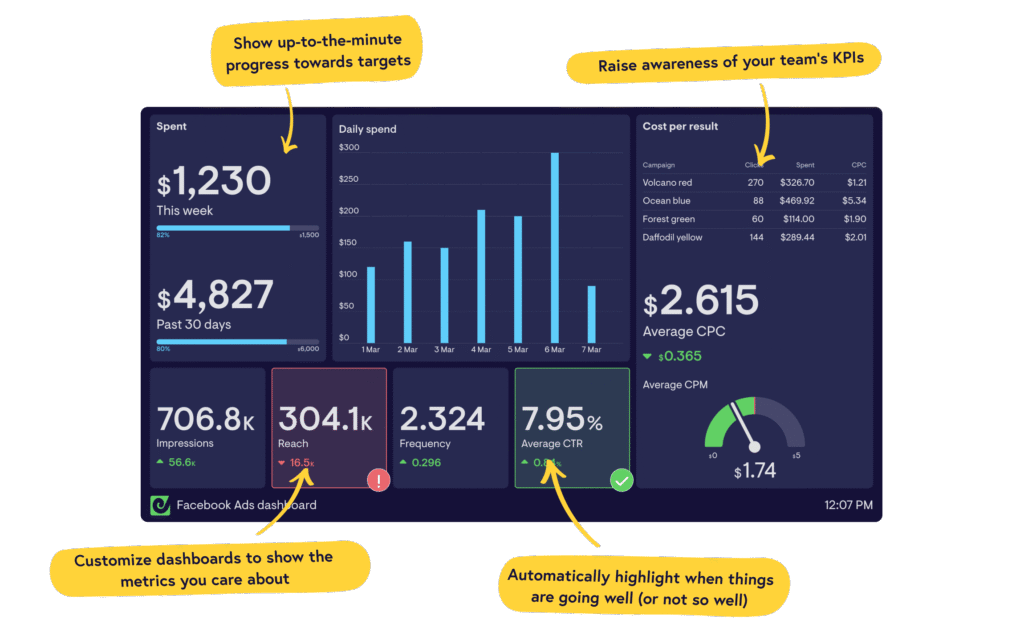
A more useful dashboard should include:
Reach
How many people actually saw the content?
Engagement rate
How much interaction did the content generate relative to the number of people reached?
Shares
Did people consider the content useful enough to pass to others?
Comments
Did the post stimulate useful discussion or simply arguments?
Video retention
Did people continue watching?
Link clicks
Did the audience take the intended next action?
Follower growth
Did the content attract people who wanted more?
Unfollows
Did the content cause people to leave?
Negative feedback
Where available through Page or professional analytics, watch for indications that users are rejecting the content.
Repeat performance
Perhaps most importantly: what happened to the next five or ten posts?
One controversial post can go viral.
A healthy Page consistently performs.
17. A better strategy: create conversation without manufacturing outrage
The answer is not to avoid controversial subjects.
Technology, politics, business, telecoms and public policy are naturally controversial.
The objective is to create useful controversy, not manufactured outrage.
Instead of:
“This Government Has Completely Failed Nigerians!”
try:
“What the Government’s New Policy Means for Nigerian Internet Users”
Instead of:
“MTN Is Ripping Customers Off Again!”
try:
“Why Some MTN Customers May Pay More Under the New Pricing Structure”
Instead of:
“Nigerians Are Angry About This New iPhone!”
try:
“Why Apple’s New iPhone Price Could Be a Problem for Nigerian Buyers”
The second versions can still generate disagreement.
But they give the audience something to discuss.
That is a healthier form of engagement for a publisher.
18. The real lesson from Facebook’s algorithm history
The Facebook Papers did not prove that all negative engagement kills reach.
They proved something more interesting.
They showed that when platforms use engagement as a proxy for value, the proxy can fail.
Anger can look like interest.
Controversy can look like relevance.
Arguments can look like meaningful conversation.
And a viral post can look successful even when the audience is actually telling the platform:
“We don’t like this.”
Meta’s subsequent ranking changes demonstrate that these systems are continually adjusted as researchers discover unintended consequences. The company itself has acknowledged that ranking evolves and that user feedback, research and testing influence those changes.
For Facebook publishers in 2026, therefore, the safest rule is not:
“Never get Angry reactions.”
It is:
“Don’t build your content strategy around provoking them.”
An angry comment can be engagement.
An Angry reaction can be engagement.
A heated debate can be engagement.
But none of those automatically means Facebook should show the post to more people.
The platform is trying to predict what individual users will find relevant and worthwhile. At the same time, it gives those users mechanisms to signal when they want less of something.
The practical lesson for publishers is therefore straightforward:
Don’t optimise for the biggest possible reaction. Optimise for the strongest possible audience response.
That means producing content people want to read, watch, share, discuss and return to — without having to manufacture anger to make the algorithm notice.
Bottom line: There is solid evidence that Facebook uses negative feedback and user preferences as ranking inputs, and strong historical evidence that the platform once gave excessive ranking weight to emotional reactions. What cannot responsibly be claimed is that every Angry reaction, critical comment or hide currently triggers a fixed Page-wide reach penalty. The modern Facebook ranking system is considerably more complex than that.

AI Engineer (Applied Generative AI), Web Developer, Growth Systems Builder and tech writer with a great passion for building AI-powered workflows, websites, and digital growth systems.


1 comment