A WIRED.Africa Industry Field Review Of The Event…
The Port Harcourt Tech Expo 2026, held at the EUI Events Centre in GRA, Port Harcourt, positions itself within a growing lineage of regional innovation gatherings that aim to decentralize Nigeria’s tech ecosystem beyond Lagos.
In assessing the 2026 edition, WIRED.Africa finds a more layered reality than simple praise or critique allows. The event is, on one hand, an impressive demonstration of production capability, programming ambition, and ecosystem engagement. On the other, it sits in the shadow of its 2025 predecessor—which, according to TechCabal’s reporting, drew over 5,200 in-person attendees and 5,000 virtual participants, under the theme “Emergence”, and positioned the expo as a fast-scaling national innovation platform.
That contrast matters. It frames 2026 not as a standalone success or failure, but as a maturity checkpoint in an event series that is clearly still evolving its operational architecture.
Programming & Intellectual Direction: Strong Continuity, Sharper Realism
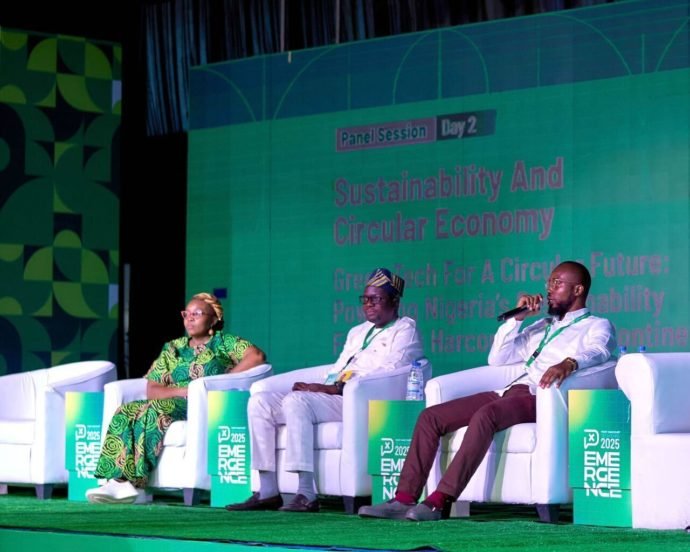
Where the 2026 edition holds its ground most firmly is in its substantive thematic direction.
Across sessions, the discourse leaned less toward aspirational futurism and more toward systems-level constraint analysis. This shift reflects a maturing ecosystem conversation.
Core Discussion Pillars
1. Infrastructure as the primary constraint layer
Rather than treating infrastructure as background context, speakers positioned it as the central determinant of innovation viability in the Niger Delta.
Key issues included:
- Energy instability and operational cost distortion
- Connectivity gaps affecting product scalability
- Regional disparities in cloud and data infrastructure access
- The concentration of digital infrastructure in Lagos and its downstream effects
This created some of the most grounded conversations of the entire expo—particularly from operators building in constrained environments.
2. Fintech beyond metropolitan Lagos
Fintech discussions were notably pragmatic. Instead of product showcases, panels interrogated:
- Agent network scalability in semi-urban economies
- Trust systems in cash-heavy markets
- Regulatory friction across state-level operations
- Distribution cost challenges outside core urban corridors
The strongest insights emerged when speakers reframed fintech not as innovation, but as logistics-intensive financial infrastructure.
3. AI adoption under constraint conditions
Artificial intelligence was treated with unusual restraint compared to typical tech conferences.
Rather than hype cycles, the focus shifted to:
- Cost barriers to deployment in African enterprise contexts
- Data scarcity and localization challenges
- Workflow automation in SMEs with limited infrastructure stability
- Labour transition risks in administrative sectors
The tone was notably pragmatic: AI was not presented as transformative by default, but conditional on infrastructure readiness.
4. Energy-tech convergence and industrial digitization
Given Port Harcourt’s economic identity, energy systems naturally shaped a significant part of the agenda.
Discussions focused on:
- Digital optimization in oil and gas operations
- Early-stage renewable energy deployment barriers
- Industrial IoT adoption constraints
- Environmental compliance technologies
These sessions were most effective when grounded in operational case studies rather than policy abstraction.
Speaker Quality: Practitioner-Led, Experience-Heavy, Unevenly Polished
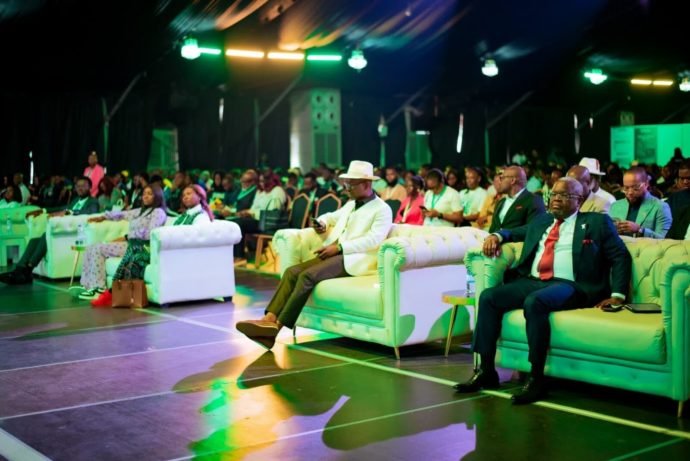
One of the most consistent strengths of the expo was its speaker curation strategy.
Rather than relying heavily on celebrity keynotes, the event leaned toward:
- Active startup founders
- Engineers building within infrastructure constraints
- Policy operators with regulatory exposure
- Ecosystem builders from fintech, energy, and logistics sectors
This created a conference tone that felt closer to a working session than a ceremonial summit.
What worked
The strongest speakers shared three defining traits:
- Operational specificity — referencing actual systems, costs, and constraints
- Contextual grounding — situating technology within local realities
- Practical honesty — acknowledging failures and trade-offs openly
These qualities elevated several sessions into genuinely insightful technical discussions rather than generic thought leadership.
Where it fell short
However, consistency remains a challenge. A portion of sessions drifted into:
- Broad commentary without technical depth
- Recycled innovation narratives
- Lightly moderated discussions lacking analytical structure
This unevenness suggests a conference still refining its editorial curation layer.
On-Ground Execution: Production Strength Remains a Core Advantage
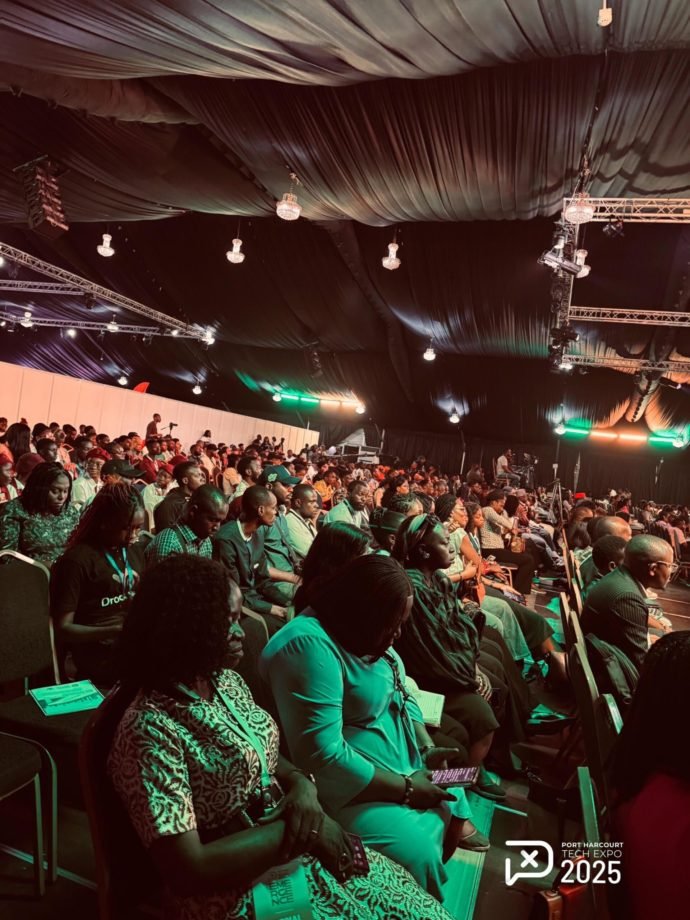
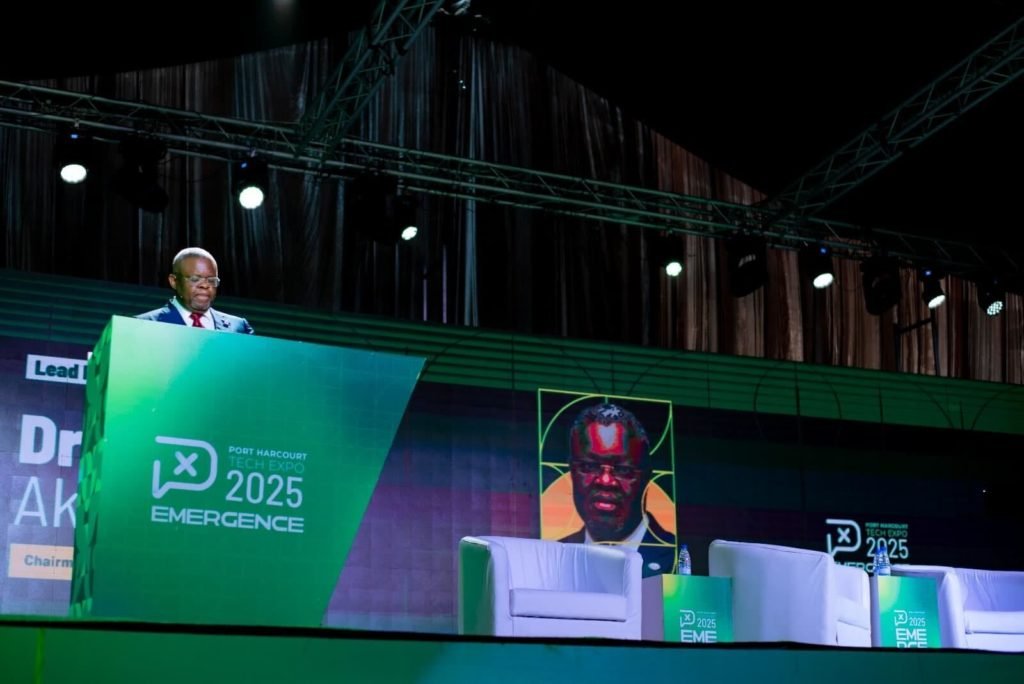
Despite structural issues in digital operations (addressed later), the physical execution of the expo remains one of its strongest assets.
- Stage design was cohesive and professionally branded
- Lighting and audio delivery were stable across major sessions
- Exhibition flow encouraged sustained foot traffic and engagement
- Spatial planning supported networking and visibility
In production terms, the event meets—and in some cases exceeds—regional conference standards.
The Critical Friction Point: Digital Operations and Media Access
Where the contrast becomes most visible is in digital coordination and communication systems.
From WIRED.Africa’s direct field experience:
- Media accreditation requests sent via email received no response
- Follow-up WhatsApp communication was partially acknowledged, then went silent mid-process
- On-site access required manual intervention and last-minute coordination
This is not an isolated inconvenience—it reflects a systemic gap in stakeholder management design.
In parallel, the event’s broader digital presence showed limitations:
- Sparse and minimally updated website information
- Limited clarity on schedules and session architecture
- Weak pre-event discoverability for attendees
- Fragmented communication channels without unified response ownership
In 2026, this stands out not as a minor flaw, but as a structural mismatch between physical ambition and digital readiness.
Balanced Assessment: Two Events Running in Parallel
What emerges from a full reading of the expo is a dual reality:
On stage and on-ground, the event is:
- Confident
- Well-produced
- Intellectually relevant
- Strongly networked
In its digital and operational layer, it is:
- Under-structured
- Inconsistently responsive
- Weak in media and attendee communication systems
Both truths coexist without cancelling each other out.
Final WIRED.Africa Industry Verdict
The Port Harcourt Tech Expo 2026 is best understood as a high-performing physical innovation conference still catching up with the operational expectations of a digital-first era.
It succeeds in creating an environment where technology is discussed with seriousness and grounded realism. It struggles in ensuring that access to that environment—especially for media, remote stakeholders, and early planners—is equally structured.
Overall Industry Score: 7.9 / 10
- Strengths: Production quality, speaker relevance, thematic depth, ecosystem engagement
- Weaknesses: Digital communication, accreditation systems, information architecture
Closing Frame
The 2026 edition confirms a broader trajectory: Port Harcourt is no longer experimenting with hosting tech conversations—it is actively staging them at scale.
The next phase of maturity will not be defined by stage design or speaker quality, but by whether the ecosystem can match its physical excellence with equally disciplined digital infrastructure, communication systems, and stakeholder coordination.
Until then, the expo remains exactly what it is today: a strong physical conference operating slightly ahead of its digital backbone.

The WIRED.Africa's Press Desk delivers breaking news, official announcements, and timely updates on technology, business, innovation, and digital policy. Stories published under this byline are produced through the collaborative efforts of the editorial team and trusted news sources.