


The Nigerian Communications Commission (NCC) has granted Amazon’s Project Kuiper a seven-year landing permit, paving the way for the US technology giant to begin satellite internet operations in the country from 2026. The approval, dated February 28, 2026, allows Kuiper to operate its space segment over Nigerian territory as part of a planned global constellation of up to 3,236 low-Earth orbit (LEO) satellites.
With that decision, Nigeria has effectively opened its satellite broadband market to real competition—and brought Starlink’s period of uncontested dominance to an end.
Since launching in Nigeria, SpaceX’s Starlink has quickly become the country’s most recognisable satellite internet brand. It filled a gap that fibre and mobile networks have struggled to close, especially in remote and underserved areas, and built a fast-growing customer base with little direct competition from another global LEO provider.
Kuiper’s arrival changes the story.
Backed by Amazon’s deep pockets, global scale and cloud infrastructure, Kuiper becomes the second major LEO operator cleared to operate in Nigeria. Industry watchers expect its entry to intensify competition on pricing, coverage, enterprise services and overall service quality—areas where Starlink has so far set the pace.
By approving Kuiper, the NCC is also sending a clear message: satellite broadband in Nigeria is no longer a one-horse race. The permit gives Amazon the regulatory certainty it needs to invest in ground infrastructure, build local partnerships and target government and enterprise customers, while giving consumers confidence that another serious alternative is coming.
What Kuiper is allowed to offer
Under the NCC permit, Amazon Kuiper is authorised to provide three broad categories of satellite services in Nigeria.
The first is Fixed Satellite Service (FSS), which covers broadband connectivity for homes, businesses, telecom base stations and government facilities. This is the core of consumer and enterprise satellite internet.
The second is Mobile Satellite Service (MSS), typically used for portable and mobile communications such as emergency response, maritime safety, asset tracking and connectivity in hard-to-reach locations.
The third is Earth Stations in Motion (ESIM), which enables high-speed internet on moving platforms including ships, aircraft, trains and connected vehicles—a growing requirement for aviation, shipping and logistics operators.
Taken together, the scope of approval shows that Kuiper is not coming into Nigeria simply as a rural internet provider. Instead, Amazon is positioning the service as a broad connectivity platform that can serve households, large enterprises, transport operators and critical national infrastructure.
Why Ka-band matters
Kuiper has been approved to operate in the Ka-band frequency range, using uplink frequencies between 27.5 and 30.0 GHz and downlink frequencies between 17.7–18.6 GHz and 18.8–20.2 GHz.
Ka-band is standard for modern high-capacity satellite systems and allows far more data to be transmitted than older satellite technologies. It supports the use of multiple focused spot beams, which dramatically increases total network capacity and improves performance for users on the ground.
For customers, this means faster speeds and lower latency. For operators, it lowers the cost of delivering data at scale, making satellite broadband more competitive with fibre and mobile networks—even outside rural areas.
Amazon has said its standard Kuiper terminal is designed to deliver speeds of up to 400 Mbps. The NCC approval allows for 100 MHz channels, a configuration that balances performance with the need to keep customer equipment affordable.
While Ka-band signals are more vulnerable to heavy rainfall—a real consideration in Nigeria’s climate—modern LEO systems use adaptive technologies that automatically adjust power levels, routing and modulation to maintain service during adverse weather.
Why Nigeria is a priority market
Nigeria is one of Africa’s most important broadband markets. With a population of over 200 million people, rapid urban growth and persistent connectivity gaps, demand for alternative broadband solutions remains strong.
NCC data shows that more than 23 million Nigerians still live in unserved or underserved areas. Mobile broadband penetration stood at 50.58 percent as of November 2025, while fibre coverage remains heavily concentrated in major cities.
LEO satellites are particularly attractive in this environment because they orbit much closer to Earth than traditional geostationary satellites, delivering lower latency that supports video calls, cloud services, online learning and digital financial platforms.
For businesses, Kuiper could play a role in supporting telecom backhaul, oil and gas operations, mining sites, ports, logistics corridors and remote industrial facilities where laying fibre is either too costly or impractical.
Amazon officially rebranded Project Kuiper to Amazon LEO in November 2025 and has been laying the groundwork for international expansion. Late last year, the company announced a partnership with Vanu aimed at extending satellite-enabled connectivity to underserved communities in parts of Africa, starting in Southern Africa. The Nigerian approval places Africa’s largest economy firmly within that expansion plan.
Pressure builds on Starlink
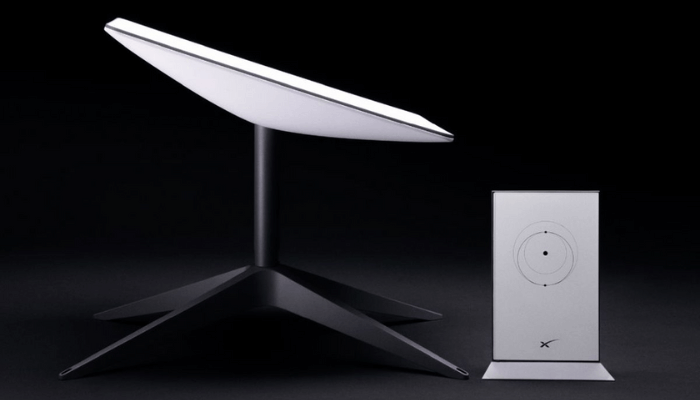
With Kuiper now cleared to operate, Starlink is no longer alone at the top of Nigeria’s LEO satellite market. Competition between two global players is expected to push prices down, improve customer service and accelerate the rollout of new technologies and service tiers.
For Nigerian consumers and businesses, that competition promises more choice and better value. For regulators, it marks an important step towards a more open, competitive and resilient satellite communications market—one that could play a critical role in closing Nigeria’s digital divide in the years ahead.

AI Engineer (Applied Generative AI), Web Developer, Growth Systems Builder and tech writer with a great passion for building AI-powered workflows, websites, and digital growth systems.