




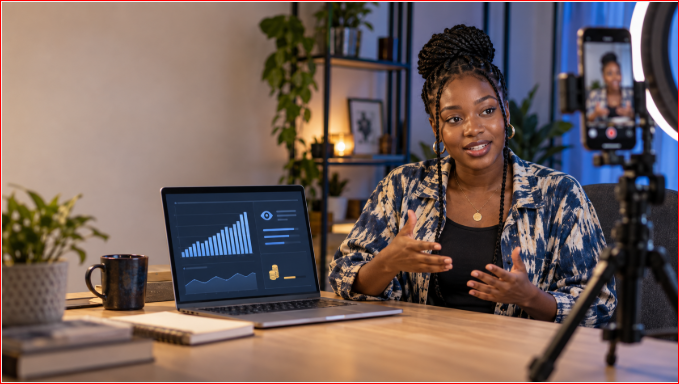
African creators can build large Facebook audiences and still struggle to turn views into dependable income. The gap is visible in two places: what a view is worth in different advertising markets, and which ways of earning are available to creators in each country. Wired.Africa takes a deeper look into Facebook Monetization in Africa and how creators in the continent are impacted.
That does not prove Meta deliberately sets out to underpay African creators. It does raise a fair question: when creators contribute views, content and engagement to a global platform, why can’t they see how regional ad markets translate into their earnings?
The available evidence points to a real disparity, but it has limits. Meta does not publish Facebook creator payout rates by country. Public estimates of earnings per thousand views are often based on self-reported accounts, different video formats and different definitions of a “view.” They should not be presented as an official Meta rate.
Facebook monetization reaches Nigeria—but access is not equal across features
Meta introduced Facebook Content Monetization in 2024, combining In-Stream Ads, Ads on Reels and the Performance Bonus into one programme. It pays for eligible Reels, longer videos, photos and text posts. Meta described the payout model as performance-based and said earnings depend on how eligible content performs. (Meta’s 2024 monetization announcement)
Nigeria was included in the earlier expansion of Facebook video monetization tools. But eligibility for one Facebook programme does not mean every Meta monetization product is available in every African country.
A recent investigation into Facebook Subscriptions access in Nigeria documented Nigerian creators receiving prompts to activate Subscriptions, then encountering restrictions when they tried to enrol. The report also quoted Nigerian creator Jude Anyanwu, who said he enabled Stars after receiving a prompt and later lost monetization access. That is his account of what happened; it does not establish why Meta took action. Meta had not responded to the report’s questions by publication.
The distinction matters. Facebook Content Monetization and Facebook Subscriptions are separate products with separate availability and eligibility rules. A creator may be able to earn from some formats while being unable to offer paid subscriptions. Confusing prompts and unavailable features can leave creators unsure about what they are actually allowed to use.

The payout comparison: a major gap, with an important caveat
The Africa Creator Economy Report 2.0 says creators in Africa typically earn under $1 per 1,000 views from platform payouts, compared with $3–$10 in the United States or Europe. That suggests a substantial regional gap. But the figure is a broad platform-level benchmark; it is not a Meta-specific rate, a Facebook CPM or a guaranteed payout for any creator. Public complaints from creators in region show this figure is even less than it is in the report.
| Region in the report | Reported earnings benchmark | What the figure represents |
|---|---|---|
| Africa | Under $1 per 1,000 views | Broad platform-payout estimate |
| United States and Europe | $3–$10 per 1,000 views | Broad comparison in the report |
| Facebook/Meta by country | No public rate card found | Meta does not publish a comparable country table |
That caveat is central to this investigation. A Facebook creator’s dashboard rate cannot be inferred from a general estimate covering multiple platforms. Nor can an advertiser’s CPM—the amount an advertiser pays for 1,000 ad impressions—be treated as the creator’s RPM, or earnings per 1,000 views. Those measures have different denominators and reflect different parts of the transaction.
Meta now says creators can see an “Earnings Rate,” an approximate amount earned per 1,000 qualified views. That is more useful than total views alone, but it still does not give the public a country-by-country rate card or show how Meta’s global creator payouts are distributed across regions. (Details of Meta’s new creator metrics)
Meta’s $3 billion headline does not reveal Africa’s share
Meta says Facebook paid creators nearly $3 billion in 2025, 35% more than the previous year. It also says 60% of that total went to Reels, with the rest going to Stories, photos and text posts. The figures show that Meta’s worldwide creator payouts are growing. They do not show how much was paid to African creators, how many African creators received payments, or the median payout in Nigeria, Kenya, Ghana or South Africa. (Meta’s 2025 creator payout figures)
The wider African creator economy faces similar income pressures. An independent report on African creators estimates the market at $3 billion and says about six in ten African creators earn less than $100 per month from their creative work. In the survey cited in the report, ad revenue made up 5.8% of creators’ reported income; sponsorships and sales of products or services were larger sources. These are creator-economy figures, not Facebook-only earnings.
The gap in Meta’s public reporting is therefore not proof that African creators receive a specific fraction of their US counterparts’ earnings. It is a lack of comparable data: Meta announces a global payout total, while creators and publishers cannot use that number to assess their region’s share.
Why the same view count can earn different amounts
Advertising markets differ. Advertisers usually bid more for some audiences than others because they expect different purchasing power, conversion rates and commercial returns. If more advertiser demand is concentrated in the United States or Europe, views from those markets may have greater monetization value than views from markets with lower ad spending.
But that explanation does not settle the fairness question. It explains why rates might differ; it does not explain exactly how Meta calculates each creator’s payment. Meta says Facebook Content Monetization is performance-based, and its newer dashboard metrics distinguish qualified from non-qualified views. A view count by itself is therefore not a reliable estimate of earnings.
Creators can reasonably ask for more detail about:
- How “qualified views” are counted and excluded.
- How audience location affects a creator’s Earnings Rate.
- How format, watch time and engagement contribute to payment.
- Whether rates differ across countries, and by how much.
- How the global payout pool is distributed across regions.
Until Meta publishes those details, creators comparing their own dashboard figures with another person’s screenshots are comparing accounts that may have different audiences, formats, eligibility and content performance.
What creators are publicly saying
Public complaints show frustration with falling or unpredictable earnings, but they do not establish an industry-wide rate. For example, creators posting on public forums have described sudden drops in estimated earnings after joining Content Monetization or after periods of stronger payouts. These posts are self-reports, usually without independently verified account data, and many do not identify the creator’s country. They illustrate the transparency problem; they cannot establish a typical African payout. (A creator’s report of a sudden earnings drop; A report of lower earnings after switching programmes)
The more specific Nigerian concern documented in the report on Facebook Subscriptions access is about availability and communication: creators reportedly received invitations for Subscriptions, then found that they could not complete enrolment. One creator also said he lost monetization after acting on a Stars prompt. These accounts deserve a clear response from Meta, but the available reporting does not establish that African creators as a group were deliberately penalized.
The cost of “open” monetization
A programme can be technically available and still be difficult to rely on. If the effective rate is low, if eligibility changes by product or country, or if creators cannot understand why views did not qualify, monetization may offer little predictability even to creators who qualify.
That affects what creators can plan: production budgets, equipment purchases, paid collaborators and the time they devote to making content. It also makes platform comparisons difficult. A creator deciding whether to invest in Facebook needs more than a global payout headline; they need transparent, local information about which products are available and how eligible views translate into earnings.
Meta has taken steps to simplify monetization by combining several Facebook programmes and adding new dashboard metrics. Those are useful changes. The unresolved issue is that public reporting still does not provide a country-by-country view of creator access and payouts.
What Meta should disclose
A more accountable system would publish an annual breakdown showing the number of monetized creators and total payouts by region, with clear definitions and privacy safeguards. It would also explain how “qualified views” and the displayed Earnings Rate work, identify product availability by country, and give creators a consistent way to challenge unexplained changes in eligibility or payment.
This would allow creators, advertisers and researchers to distinguish between lower earnings caused by audience-market economics and lower earnings caused by programme rules or opaque calculations.
The evidence supports a firm conclusion, but not every accusation: African creators face a monetization gap, and Meta’s public reporting does not yet allow them to measure the company’s contribution to it. The broad regional payout benchmark indicates that creators in Africa earn less per thousand views across platforms. Meta’s global payout announcement shows substantial worldwide payments. Neither tells African creators what they need to know about Facebook specifically: how much the platform pays in their markets, and why.
Until that information is published, claims that Meta pays a fixed Nigerian CPM—or that every creator receives a predictable amount per thousand views—should be treated with caution.
Related reading: Facebook Subscriptions access in Nigeria · How Facebook’s algorithm treats angry reactions · Changes to creator monetization rules in Nigeria

The WIRED.Africa's Press Desk delivers breaking news, official announcements, and timely updates on technology, business, innovation, and digital policy. Stories published under this byline are produced through the collaborative efforts of the editorial team and trusted news sources.