






Africa is no longer just an emerging technology market—it is becoming one of the world’s fastest-growing innovation hubs. From artificial intelligence and fintech to healthcare, logistics, climate technology, and digital infrastructure, the continent’s startups are solving complex local challenges while building products with global relevance.
The best African tech startups are attracting billions of dollars in investment, partnering with multinational corporations, and creating technologies that could redefine industries far beyond Africa. Rather than replicating Silicon Valley ideas, these companies are developing solutions specifically designed for African realities, many of which are now being adopted internationally.
With more than 1.5 billion people, the world’s youngest population, increasing internet penetration, expanding mobile connectivity, and a rapidly growing digital economy, Africa presents enormous opportunities for technology-driven businesses. Governments, venture capital firms, development institutions, and global technology companies are investing heavily in startups capable of accelerating financial inclusion, improving healthcare, modernizing agriculture, and expanding digital infrastructure.
Whether you are an investor, entrepreneur, technology enthusiast, or simply curious about Africa’s innovation ecosystem, understanding the startups leading this transformation offers valuable insight into where the continent—and perhaps the world—is headed next.
Quick Answer: Which Are the Best African Tech Startups in 2026?
If you’re looking for the best African tech startups to watch this year, these companies stand out for their innovation, market impact, funding, and growth potential:
- Flutterwave (Nigeria)
- Chpter (Kenya)
- Sand Technologies (South Africa)
- Amini (Kenya)
- Leta (Kenya)
- Kubik (Ethiopia)
- mPharma (Ghana)
- Cassava Technologies (Pan-African)
- Zipline (Rwanda & Ghana operations)
- 54gene (Nigeria)
These startups are pioneering advances in financial technology, artificial intelligence, healthcare, environmental intelligence, climate technology, logistics, and enterprise software—industries expected to shape Africa’s digital economy over the coming decade.
Why African Tech Startups Are Growing Faster Than Ever

Over the past decade, Africa has experienced one of the world’s fastest-growing startup ecosystems. While funding cycles have fluctuated globally, investor interest in African technology companies remains strong because the continent continues to offer significant untapped opportunities.
Several factors are fueling this growth.
A Young, Digital-First Population
Africa has the youngest population globally, with millions of digitally connected consumers entering the workforce every year. Mobile devices have become the primary gateway to banking, commerce, education, healthcare, and entertainment, creating enormous demand for digital services.
This demographic advantage allows startups to build products for a generation that is highly adaptable to new technologies.
Mobile Technology Is Driving Innovation
Unlike many developed markets that transitioned through desktop computing, much of Africa adopted smartphones as the primary computing device. This mobile-first environment has encouraged startups to design lightweight, accessible applications that work efficiently even in areas with limited connectivity.
As smartphone adoption continues to rise, so does the addressable market for digital products.
Financial Inclusion Remains a Massive Opportunity
Hundreds of millions of Africans remain underserved by traditional financial institutions. Fintech startups have responded by developing digital payment systems, mobile wallets, lending platforms, remittance solutions, and cross-border payment infrastructure.
Companies such as Flutterwave have demonstrated that solving African payment challenges can create globally competitive businesses.
Artificial Intelligence Is Becoming a Competitive Advantage
Artificial intelligence is increasingly transforming sectors including healthcare, agriculture, logistics, education, finance, and government services across Africa.
Rather than merely consuming AI developed elsewhere, several African startups are creating machine learning models trained on African datasets, making their solutions more accurate for local markets.
Climate Innovation Is Becoming Essential
Africa is among the regions most affected by climate change while contributing relatively little to global emissions.
This reality has accelerated investment in startups working on renewable energy, sustainable agriculture, environmental monitoring, recycling technologies, carbon intelligence, and green construction materials.
Climate technology is expected to become one of the continent’s fastest-growing startup sectors over the next decade.
How We Selected the Best African Tech Startups
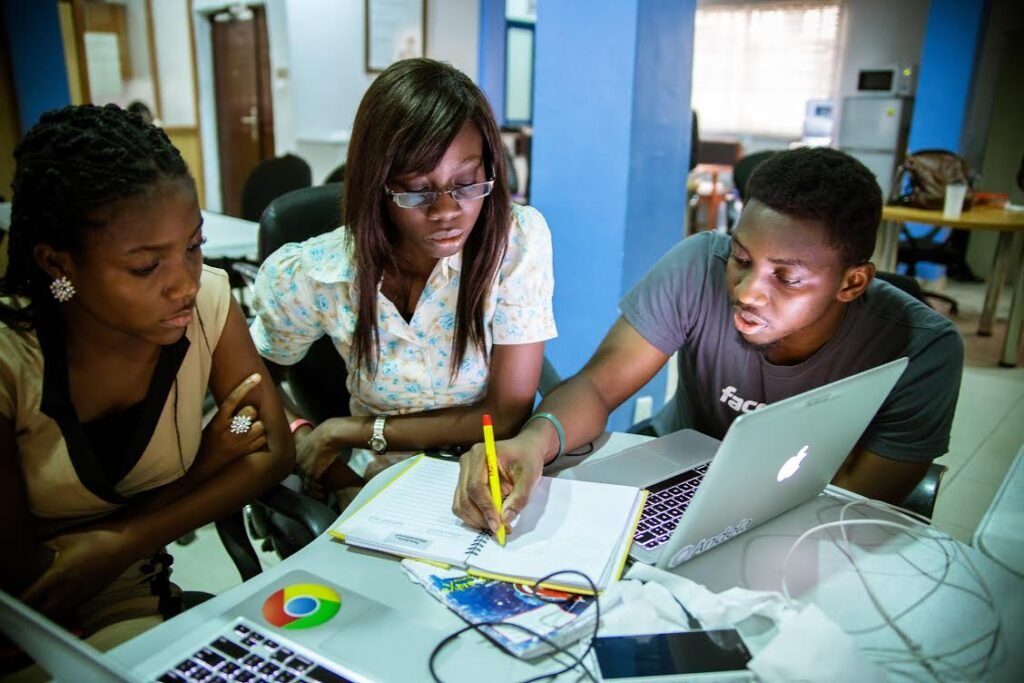
The startups featured in this list were selected based on several factors, including:
- Innovation and originality
- Real-world problem solving
- Scalability across African markets
- Funding and investor confidence
- Market impact
- Technology adoption
- Future growth potential
- Global competitiveness
Rather than focusing solely on valuation, this list prioritizes startups developing technologies capable of transforming industries across Africa and beyond.
1. Flutterwave (Nigeria): Building the Financial Infrastructure Powering Africa

Founded in 2016, Flutterwave has become one of Africa’s most recognizable technology companies and a symbol of the continent’s fintech revolution. While many payment companies focus on serving individual countries, Flutterwave set out to solve one of Africa’s biggest economic challenges—making it easier for businesses to send and receive payments across borders.
Today, businesses ranging from startups to multinational corporations use Flutterwave to process payments across numerous African markets, connecting merchants with customers through multiple payment methods, currencies, and financial institutions.
Why Flutterwave Matters
Cross-border commerce in Africa has historically been fragmented due to different currencies, banking systems, payment regulations, and infrastructure limitations.
Flutterwave simplifies these complexities by providing developers and businesses with APIs and payment infrastructure that enable seamless transactions across multiple countries.
Its technology helps businesses expand into new markets without rebuilding their payment systems from scratch.
Rare Innovation
Rather than simply processing transactions, Flutterwave is building foundational financial infrastructure for Africa’s digital economy.
Its products include:
- Online payment processing
- Cross-border settlements
- Business payment APIs
- Merchant services
- Virtual cards
- Payment links
- Enterprise financial solutions
This infrastructure allows thousands of businesses to operate efficiently across multiple African countries.
Future Growth Potential
As the African Continental Free Trade Area (AfCFTA) expands regional commerce, companies capable of simplifying payments across borders are expected to become increasingly important.
Flutterwave is well-positioned to benefit from this trend, making it one of the most influential African startups to watch over the coming years.
2. Chpter (Kenya): Reinventing E-commerce Through Conversational AI

Traditional e-commerce assumes customers will visit websites or download shopping apps.
Chpter challenges that assumption.
Instead, the Kenyan startup has built a conversational commerce platform that enables businesses to sell products directly through WhatsApp, Instagram, Facebook Messenger, and other messaging applications where African consumers already spend much of their time.
Rather than forcing customers to change their habits, Chpter brings commerce into existing conversations.
Why Chpter Is Different
Many African small businesses rely heavily on social media for customer acquisition.
However, manually responding to inquiries, confirming inventory, processing payments, and managing customer support can quickly become overwhelming.
Chpter automates these workflows using artificial intelligence.
Businesses can deploy AI-powered assistants capable of:
- Answering customer questions instantly
- Processing product inquiries
- Completing purchases
- Managing inventory
- Sending invoices
- Tracking deliveries
- Providing customer support around the clock
Rare Innovation
Unlike conventional chatbots that follow rigid scripts, Chpter is developing intelligent commerce assistants capable of understanding customer intent and improving interactions over time.
This makes sophisticated AI-powered sales automation accessible even to small businesses with limited technical resources.
Why Investors Are Watching
As social commerce continues to expand globally, platforms that merge artificial intelligence with messaging applications are expected to become essential infrastructure for digital commerce.
Chpter’s approach positions it at the intersection of AI, e-commerce, fintech, and customer experience—one of the fastest-growing areas of the technology industry.
3. Sand Technologies (South Africa): Building Artificial Intelligence for African Enterprises
Artificial intelligence is often associated with companies in the United States or Europe, but Sand Technologies is proving that Africa can build world-class AI solutions tailored to its own needs.
Headquartered in South Africa, Sand Technologies develops enterprise-grade artificial intelligence platforms used by governments, healthcare providers, telecommunications companies, financial institutions, and major corporations.
Unlike generic AI tools, Sand Technologies focuses on solving operational problems unique to emerging markets.
Why Sand Technologies Matters
Organizations across Africa generate enormous amounts of data, yet much of it remains underutilized.
Sand Technologies transforms this information into actionable intelligence using machine learning, predictive analytics, and automation.
Its solutions help organizations:
- Improve healthcare outcomes
- Predict equipment failures
- Optimize supply chains
- Detect fraud
- Improve agricultural productivity
- Modernize public services
- Increase operational efficiency
By combining AI with large-scale data engineering, the company enables better decision-making across critical sectors.
Rare Innovation
One of Sand Technologies’ biggest differentiators is its focus on African datasets and real-world implementation rather than experimental AI demonstrations.
Instead of creating consumer chatbots, the company develops enterprise intelligence systems capable of delivering measurable business outcomes.
This practical approach has made it one of the continent’s most respected AI companies and a strong example of how African startups are contributing to the global artificial intelligence ecosystem.
4. Amini (Kenya): Using AI and Satellite Data to Solve Africa’s Climate Information Gap

Climate change, food insecurity, and environmental degradation are among Africa’s biggest development challenges. Yet one of the continent’s greatest obstacles is not simply responding to these issues—it is the lack of reliable environmental data.
That is the problem Amini is solving.
Founded in Kenya, Amini is building one of Africa’s most advanced environmental intelligence platforms by combining artificial intelligence, satellite imagery, geospatial analytics, and on-the-ground data collection. Its mission is to make Africa’s environmental data as accessible and actionable as financial or business data.
Why Amini Matters
Many global climate models rely on datasets that inadequately represent African landscapes. This creates challenges for governments, insurers, farmers, conservationists, and businesses trying to make informed decisions.
Amini fills this gap by generating localized environmental intelligence that reflects the realities of African ecosystems.
Its platform supports sectors including:
- Agriculture
- Carbon markets
- Financial services
- Insurance
- Forestry
- Renewable energy
- Supply chain management
Organizations can use Amini’s insights to predict crop performance, monitor drought conditions, estimate carbon sequestration, assess environmental risks, and improve sustainability reporting.
Rare Innovation
Unlike many climate technology companies that depend exclusively on satellite imagery, Amini combines satellite data with artificial intelligence and locally sourced field data, producing more accurate insights for African conditions.
This hybrid approach improves data quality while reducing one of the biggest barriers to climate resilience across the continent.
Why Investors Are Paying Attention
As environmental, social, and governance (ESG) reporting becomes increasingly important, demand for reliable environmental intelligence is expected to grow rapidly.
Amini is positioning itself as the data infrastructure powering Africa’s green economy.
5. Leta (Kenya): Bringing Artificial Intelligence to African Logistics

Moving goods efficiently across African cities remains one of the biggest operational challenges for businesses.
Traffic congestion, fragmented transport networks, inconsistent addressing systems, and rising fuel costs often make deliveries expensive and unpredictable.
Leta aims to solve this problem through artificial intelligence.
The Kenyan startup has developed a logistics optimization platform that helps companies improve delivery operations using machine learning and real-time route intelligence.
Why Leta Matters
Delivery costs significantly affect profitability for retailers, manufacturers, wholesalers, and e-commerce businesses.
Leta’s software enables organizations to:
- Optimize delivery routes
- Monitor vehicle fleets
- Reduce fuel consumption
- Increase driver productivity
- Improve delivery accuracy
- Lower operational costs
By making logistics more efficient, businesses can serve more customers while reducing expenses.
Rare Innovation
Instead of treating logistics as a simple transportation problem, Leta analyzes multiple variables simultaneously, including traffic patterns, customer locations, vehicle capacity, delivery schedules, and driver performance.
Its AI continuously refines delivery routes based on operational data, creating measurable efficiency gains.
Future Outlook
Africa’s e-commerce market is projected to expand significantly over the next decade.
As more businesses depend on rapid deliveries, AI-powered logistics platforms like Leta could become essential digital infrastructure for the continent’s supply chains.
6. Kubik (Ethiopia): Turning Plastic Waste into Sustainable Construction Materials
Plastic pollution and affordable housing are two of Africa’s most pressing challenges.
Kubik addresses both with one innovation.
The Ethiopian climate technology startup transforms difficult-to-recycle plastic waste into durable, low-carbon building materials suitable for construction projects.
Rather than viewing plastic waste as an environmental burden, Kubik treats it as a valuable raw material.
Why Kubik Matters
Rapid urbanization across Africa has increased demand for affordable housing while plastic waste continues to accumulate in cities.
Kubik’s manufacturing process helps reduce landfill waste while providing builders with environmentally friendly alternatives to conventional construction materials.
Its products are designed to be:
- Durable
- Affordable
- Low-carbon
- Weather resistant
- Suitable for large-scale construction
This circular economy model simultaneously addresses environmental sustainability and infrastructure development.
Rare Innovation
Few startups combine waste management, climate technology, advanced manufacturing, and construction innovation as effectively as Kubik.
Its proprietary material science enables discarded plastic to be converted into high-performance construction products with a significantly lower environmental footprint.
Why Kubik Could Become a Global Success Story
As governments and developers seek sustainable building materials, Kubik’s technology has the potential to expand beyond Africa into international markets facing similar environmental challenges.
7. mPharma (Ghana): Modernizing Healthcare Through Smarter Pharmaceutical Supply Chains
Healthcare innovation is often associated with hospitals or biotechnology, but access to medicine depends heavily on efficient pharmaceutical supply chains.
Ghana-based mPharma has built its business around solving this critical challenge.
The company uses technology, data analytics, and inventory management systems to improve how medicines are distributed across African healthcare markets.
Why mPharma Matters
Medicine shortages remain common in many countries due to fragmented supply chains, poor inventory forecasting, and inefficient procurement systems.
mPharma helps pharmacies and healthcare providers maintain reliable medicine supplies while reducing operational waste.
Its platform supports:
- Pharmacy inventory management
- Medicine procurement
- Supply chain optimization
- Retail pharmacy operations
- Healthcare financing
- Patient access programs
The result is improved availability of essential medicines at more affordable prices.
Rare Innovation
Rather than focusing solely on pharmaceutical sales, mPharma has built an intelligent healthcare logistics platform powered by predictive analytics.
By forecasting demand more accurately, healthcare providers can reduce stockouts, minimize expired inventory, and improve patient outcomes.
Looking Ahead
As healthcare systems across Africa continue to digitize, companies capable of strengthening pharmaceutical infrastructure are expected to play an increasingly important role.
mPharma is well positioned to remain one of Africa’s leading health technology companies.
8. Cassava Technologies: Building Africa’s Digital Infrastructure for the AI Era
Behind every successful digital economy lies reliable infrastructure.
Cloud computing, fiber connectivity, cybersecurity, data centers, and high-speed networks are essential for modern businesses, governments, and artificial intelligence applications.
Cassava Technologies is building much of that infrastructure across Africa.
Founded by Zimbabwean entrepreneur Strive Masiyiwa, the company has become one of the continent’s largest technology infrastructure providers.
Why Cassava Technologies Matters
Many African countries still depend heavily on overseas cloud infrastructure and internet connectivity.
Cassava is investing in technologies that allow businesses to process, store, and manage data closer to where it is generated.
Its operations span:
- Fiber optic networks
- Cloud computing
- Cybersecurity
- Data centers
- Artificial intelligence infrastructure
- Enterprise digital services
These investments strengthen Africa’s digital independence while supporting growing demand for cloud-based technologies.
Rare Innovation
Rather than creating consumer applications, Cassava is building the digital backbone that enables thousands of other businesses to operate.
As AI adoption accelerates across Africa, demand for local computing infrastructure is expected to increase significantly.
Cassava’s long-term investments position it as one of the continent’s most strategically important technology companies.
End of Part 2
In Part 3, we’ll cover:
- Zipline
- 54gene
- A bonus “startup to watch”
- A comparison table of all 10 startups
- Industry insights
- Expert analysis on why these companies are attracting global investors
9. Zipline: Revolutionizing Healthcare Logistics with Autonomous Drone Delivery
When discussing the best African tech startups, few companies have demonstrated real-world impact as dramatically as Zipline. While the company is headquartered in the United States, its largest and most successful deployments have taken place across Africa—particularly in Rwanda, Ghana, Nigeria, Côte d’Ivoire, and Kenya.
What began as an ambitious experiment has evolved into one of the world’s largest autonomous drone delivery networks, transporting blood, vaccines, emergency medicines, and life-saving medical supplies to remote communities.
Why Zipline Matters
Healthcare delivery in many parts of Africa is often hindered by poor road networks, long travel times, seasonal flooding, and limited transportation infrastructure.
For rural hospitals, waiting hours—or even days—for emergency medical supplies can mean the difference between life and death.
Zipline eliminates many of these barriers through autonomous electric drones capable of delivering critical supplies within minutes.
Today, governments and healthcare providers use Zipline to:
- Deliver emergency blood supplies
- Transport vaccines
- Supply essential medicines
- Improve maternal healthcare
- Support disease outbreak responses
- Reduce healthcare delivery costs
Rare Innovation
Unlike conventional logistics companies, Zipline has developed an end-to-end autonomous logistics ecosystem that combines:
- Artificial intelligence
- Autonomous flight systems
- Precision navigation
- Automated inventory management
- Real-time delivery tracking
The result is one of the world’s most advanced healthcare logistics platforms.
Future Outlook
As drone regulations mature across Africa, Zipline’s model is expected to expand into e-commerce, agriculture, disaster relief, laboratory testing, and retail logistics.
Its success demonstrates how Africa has become a proving ground for technologies that may eventually be adopted worldwide.
10. 54gene (Nigeria): Unlocking Africa’s Genetic Diversity for Global Medicine
Africa is home to the greatest genetic diversity on Earth, yet historically, African populations have been significantly underrepresented in global genomic research.
54gene was founded to address this imbalance.
The Nigerian biotechnology startup sought to build one of Africa’s largest genomic databases, helping researchers develop more inclusive medicines and improve precision healthcare.
Although the company has undergone restructuring in recent years, its impact on African biotechnology remains significant.
Why 54gene Matters
Less than 3% of global genomic datasets represent African populations, despite Africa containing the world’s richest genetic diversity.
This lack of representation affects:
- Drug development
- Disease research
- Precision medicine
- Clinical trials
- Medical diagnostics
54gene brought international attention to the importance of African genomic research.
Rare Innovation
Rather than simply collecting biological samples, the company built research infrastructure connecting hospitals, laboratories, researchers, and pharmaceutical companies.
Its work demonstrated that African genomic data could improve medical research worldwide by making treatments more effective across diverse populations.
Why It Remains Important
Even though the company’s business model evolved, 54gene helped establish biotechnology as a viable startup sector in Africa.
Its legacy continues to influence researchers, investors, and healthcare innovators across the continent.
Comparison Table: Best African Tech Startups in 2026
| Startup | Country | Industry | Key Innovation |
|---|---|---|---|
| Flutterwave | Nigeria | Fintech | Cross-border payment infrastructure |
| Chpter | Kenya | AI Commerce | Conversational commerce powered by AI |
| Sand Technologies | South Africa | Artificial Intelligence | Enterprise AI and predictive analytics |
| Amini | Kenya | Climate Tech | Environmental intelligence using AI and satellite data |
| Leta | Kenya | Logistics | AI-powered fleet optimization |
| Kubik | Ethiopia | Climate Tech | Construction materials from recycled plastic |
| mPharma | Ghana | HealthTech | Intelligent pharmaceutical supply chains |
| Cassava Technologies | Pan-African | Digital Infrastructure | Cloud, fiber, cybersecurity and AI infrastructure |
| Zipline | Rwanda & Ghana Operations | Drone Technology | Autonomous healthcare delivery |
| 54gene | Nigeria | Biotechnology | African genomics research |
What Makes These African Startups Different?
Unlike many startups in mature markets, African technology companies often solve fundamental infrastructure challenges.
Instead of optimizing existing systems, they build entirely new ones.
These startups are creating solutions for:
- Financial inclusion
- Food security
- Healthcare accessibility
- Climate resilience
- Smart logistics
- Artificial intelligence
- Enterprise digitization
- Renewable infrastructure
- Data intelligence
- Scientific research
This focus on foundational challenges gives African startups an opportunity to leapfrog traditional development models and create innovations that can be exported globally.
Emerging Sectors Driving Africa’s Startup Boom
The companies featured in this article represent industries expected to dominate African innovation over the next decade.
Artificial Intelligence
AI is increasingly powering healthcare diagnostics, fraud detection, agriculture, logistics, customer service, and enterprise decision-making.
Financial Technology
Fintech remains Africa’s largest startup sector, driven by increasing demand for digital payments, remittances, lending, and financial inclusion.
Climate Technology
Climate-focused startups are developing sustainable solutions for agriculture, waste management, renewable energy, and environmental monitoring.
Health Technology
Digital healthcare, pharmaceutical logistics, biotechnology, and telemedicine continue to attract investment as African healthcare systems modernize.
Enterprise Software
Businesses across Africa are digitizing operations through cloud computing, automation, cybersecurity, and data analytics.
Frequently Asked Questions
What are the best African tech startups?
Some of the best African tech startups in 2026 include Flutterwave, Chpter, Sand Technologies, Amini, Leta, Kubik, mPharma, Cassava Technologies, Zipline, and 54gene. These companies are recognized for developing innovative solutions in fintech, artificial intelligence, healthcare, logistics, climate technology, and digital infrastructure.
Which African country has the most tech startups?
Nigeria, Kenya, South Africa, and Egypt remain the continent’s leading startup ecosystems due to their large markets, strong entrepreneurial communities, active venture capital investment, and expanding digital economies.
Which African startup is the biggest?
Flutterwave is widely regarded as one of Africa’s most valuable privately held technology companies, alongside other major startups operating in fintech, e-commerce, telecommunications, and digital infrastructure.
Why are investors interested in African startups?
Africa offers one of the world’s youngest populations, increasing internet adoption, rapid smartphone growth, expanding digital payments, and significant opportunities to solve underserved market needs through technology.
What industries are growing fastest?
Artificial intelligence, fintech, climate technology, healthcare, agritech, logistics, cybersecurity, cloud computing, and enterprise software are among the fastest-growing technology sectors across Africa.
Is Africa becoming a global technology hub?
Yes. African startups are increasingly attracting international investors, expanding into global markets, and developing innovations that address worldwide challenges in finance, healthcare, logistics, sustainability, and artificial intelligence.
Final Thoughts
The narrative around African technology has shifted dramatically over the past decade. The continent is no longer viewed merely as an emerging consumer market for imported technologies. Instead, it has become a source of original innovation, producing startups capable of addressing some of the world’s most pressing challenges.
The best African tech startups are proving that solutions built for African markets can achieve global relevance. Whether simplifying cross-border payments, improving healthcare delivery through drones, applying artificial intelligence to enterprise operations, or transforming plastic waste into sustainable building materials, these companies are redefining what innovation from Africa looks like.
As investment in the continent’s digital economy continues to grow, the next generation of African entrepreneurs is likely to produce even more groundbreaking technologies. Governments are strengthening digital infrastructure, venture capital is becoming more active, and global technology companies are increasingly partnering with local innovators. Together, these trends point to a future where Africa is not just participating in the global technology landscape—it is helping shape it.
For entrepreneurs, investors, policymakers, and technology enthusiasts, keeping an eye on these startups is more than an exercise in trend spotting. It is an opportunity to witness the emergence of businesses that could influence industries across the world.

The WIRED.Africa's Press Desk delivers breaking news, official announcements, and timely updates on technology, business, innovation, and digital policy. Stories published under this byline are produced through the collaborative efforts of the editorial team and trusted news sources.




2 comments